Stochastic Simulation
Run multi-variant scenario simulations that account for deviations derived from historical data—not ideal assumptions.
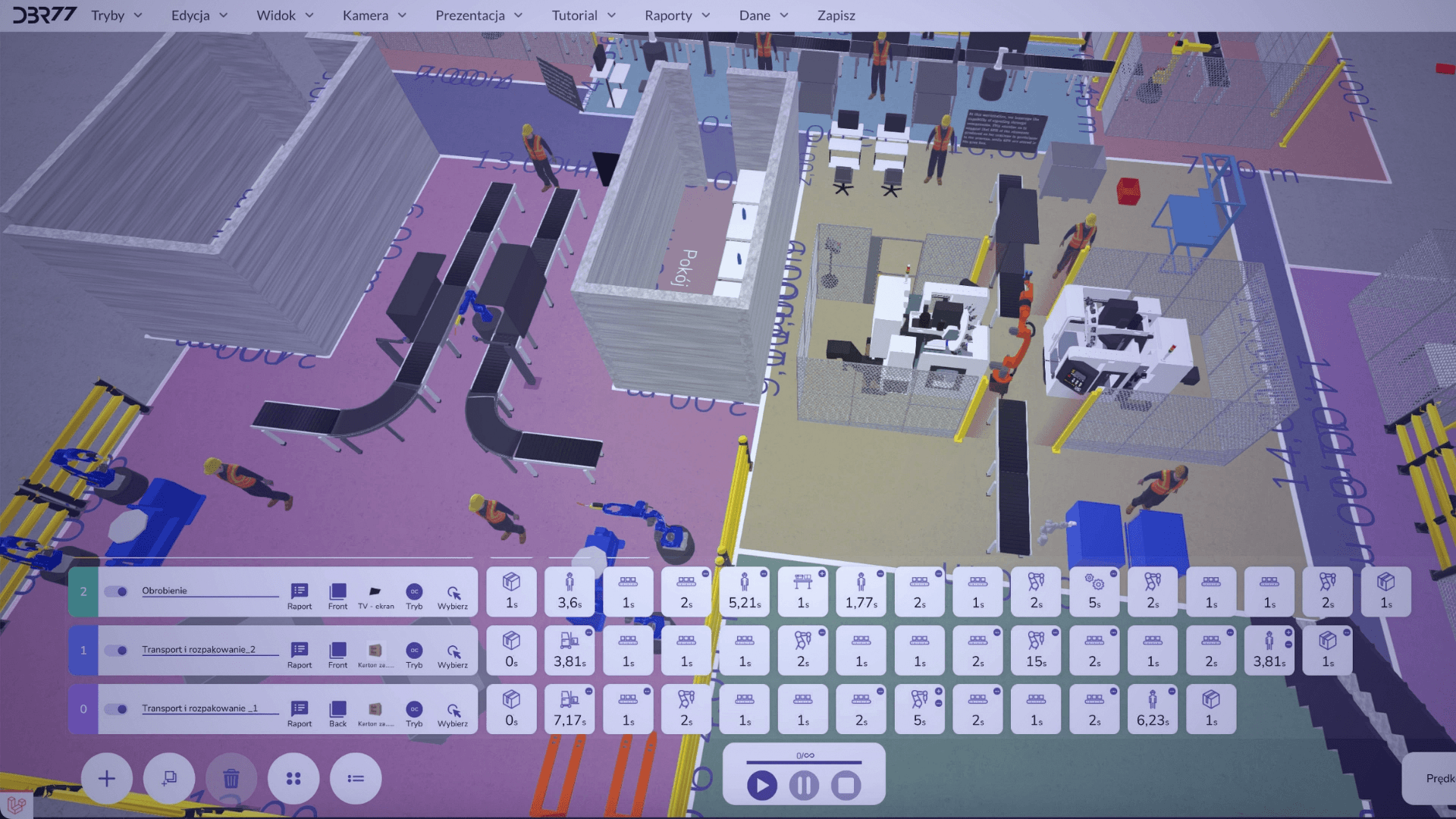
When to use
Best-fit scenarios
A practical set of situations where this capability creates the fastest value.
Capacity and delivery risk questions under variability.
Optimization of staffing, WIP, transport paths, and bottlenecks.
Decision support when constraints change daily (people, materials, orders).
Deliverables
What you get
Concrete outputs you can use for workshops, decisions, and implementation.
What you get
- Scenario variants with measurable KPI outcomes (throughput, lead time, WIP, utilization).
- Deviation models based on historical data (failures, delays, quality losses).
- A decision-ready recommendation set with trade-offs.
How it works
From model to decision
A repeatable flow that scales from early design to high-variability operations.
Start with standards and history
Use standard times and historical traces to define both expected behavior and deviations.
Simulate variants fast
Run many scenario variants to explore the space of possible outcomes.
Choose robust decisions
Pick options that remain effective when reality is not perfect.
Next step
See this capability on your process.
Book a demo to map your environment, compare scenario variants, and define an actionable rollout path (manual → historical → live data).