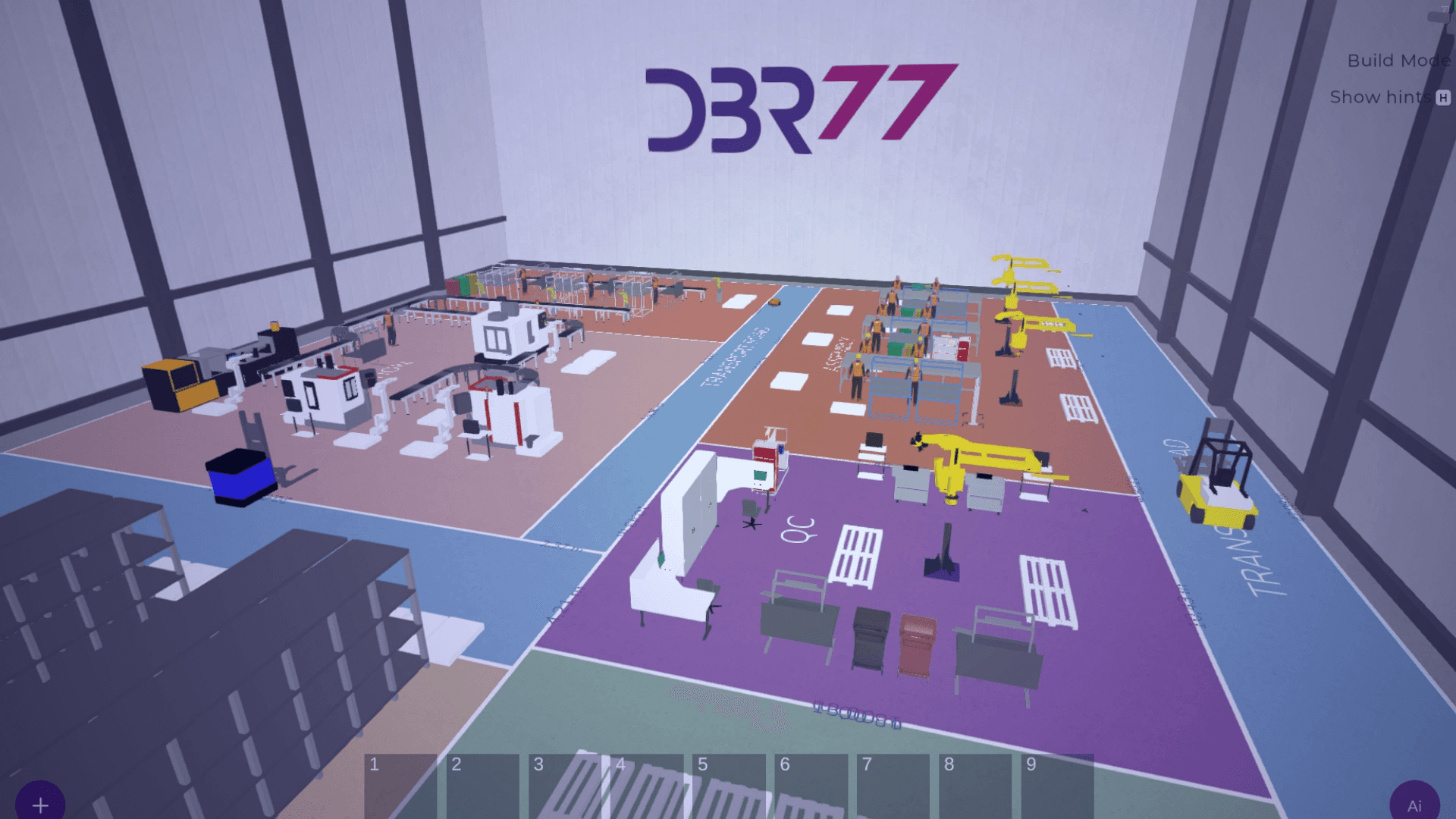
A Digital Twin that turns complex operations into decisions you can trust.
Visualize, animate, and simulate production, logistics, and other asset-heavy environments. Compare scenarios, account for deviations, and de-risk investments before changing reality.
Impact
Decision-grade outcomes, not just a model.
Digital Twin pays back when it compresses time-to-decision and reduces costly rework. Here are typical levers we see across greenfield and brownfield scenarios.
Up to
90%
shorter facility design cycle
Up to
20%
process efficiency improvement
Up to
75%
faster change implementation
By role
Speak to the decision-maker, not the feature list.
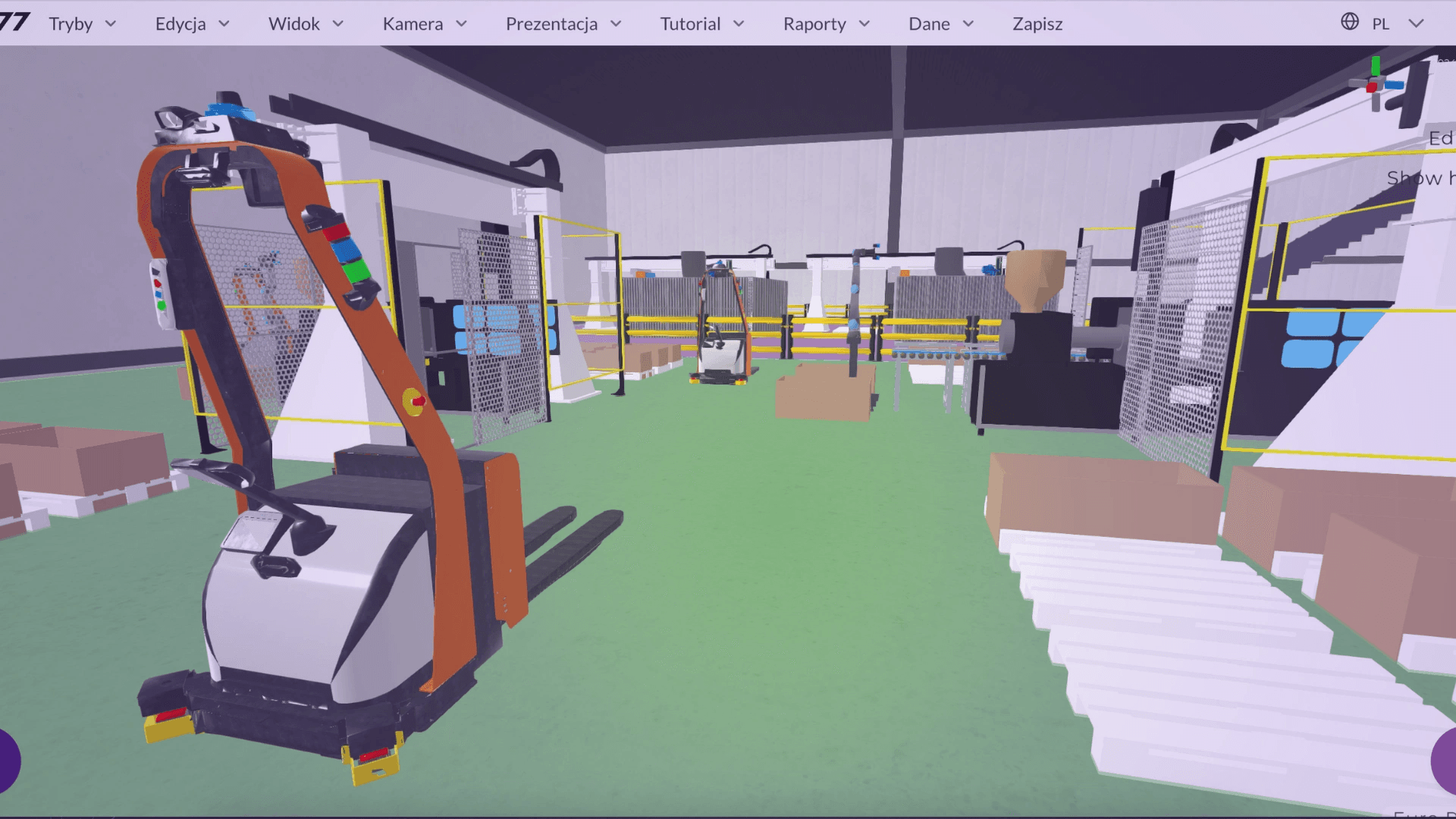
The same Digital Twin creates different value depending on who decides. Choose a role to see pains → outcomes → what to show.
Implementation
A repeatable way to build a Digital Twin
From description to scenario simulation. The process is designed to work even when your data maturity is low—and scale as you connect more sources.
Step 1
Object description
Define scope, constraints, and the physical reality you want to model (zones, access, safety).
Step 2
Process block diagram
Map flow and logic: inputs, outputs, buffers, resources, routing rules, and priorities.
Step 3
Asset completion
Add machines, stations, transport, people, and material containers—with attributes that matter.
Step 4
Layout on the floor
Place assets in 3D and validate constraints early—before changes become expensive to undo.
Step 5
Load times & data
Import cycle times, changeovers, variability, and historical traces (manual → Excel → APIs).
Step 6
Simulate variants + KPIs
Run scenario variants (including deviations) and decide based on measurable outcomes.
Three capabilities
Visualization. Animation. Simulation.
A clear product structure that scales from early design to real-time decision support.
3D Visualization
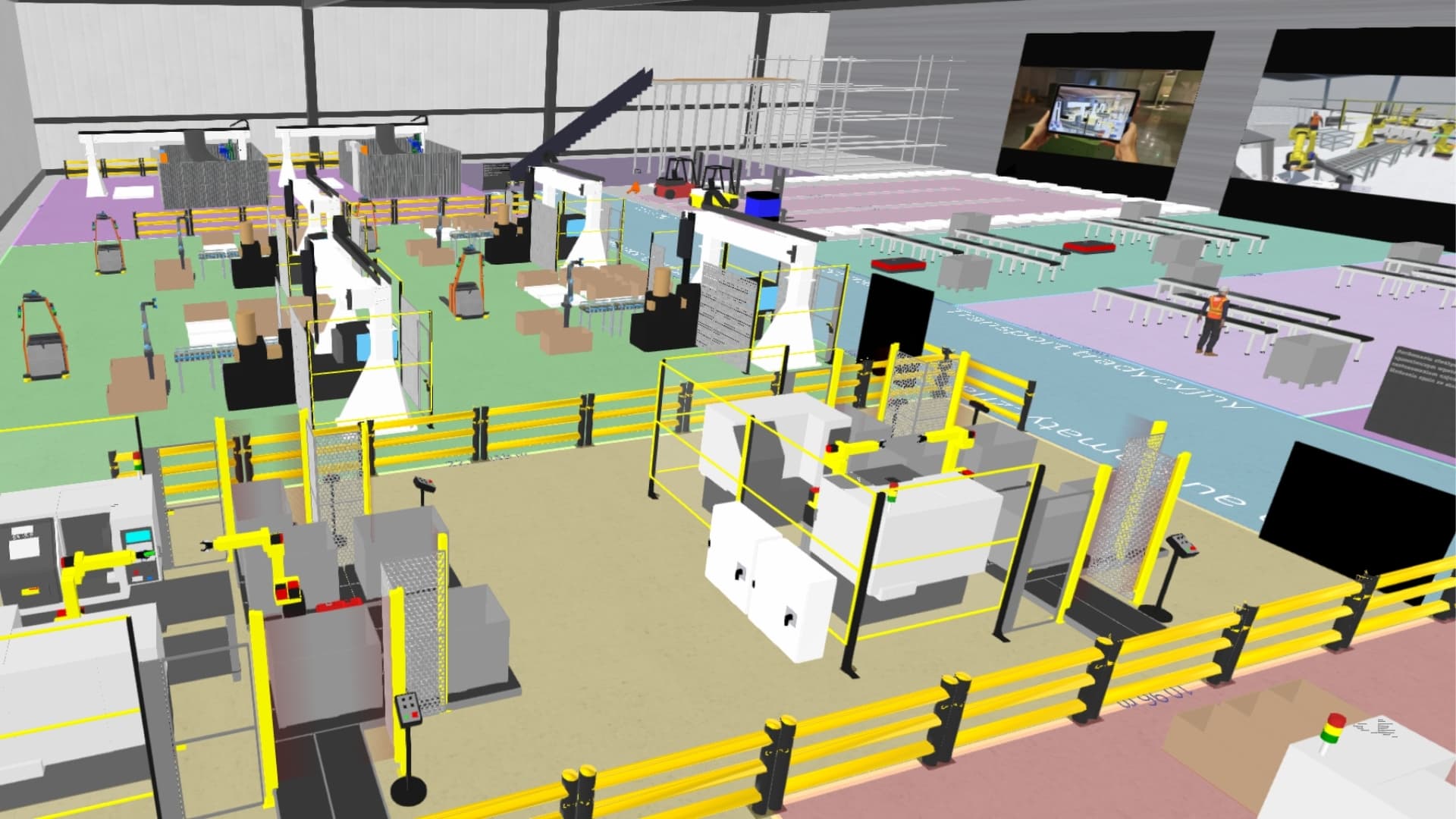
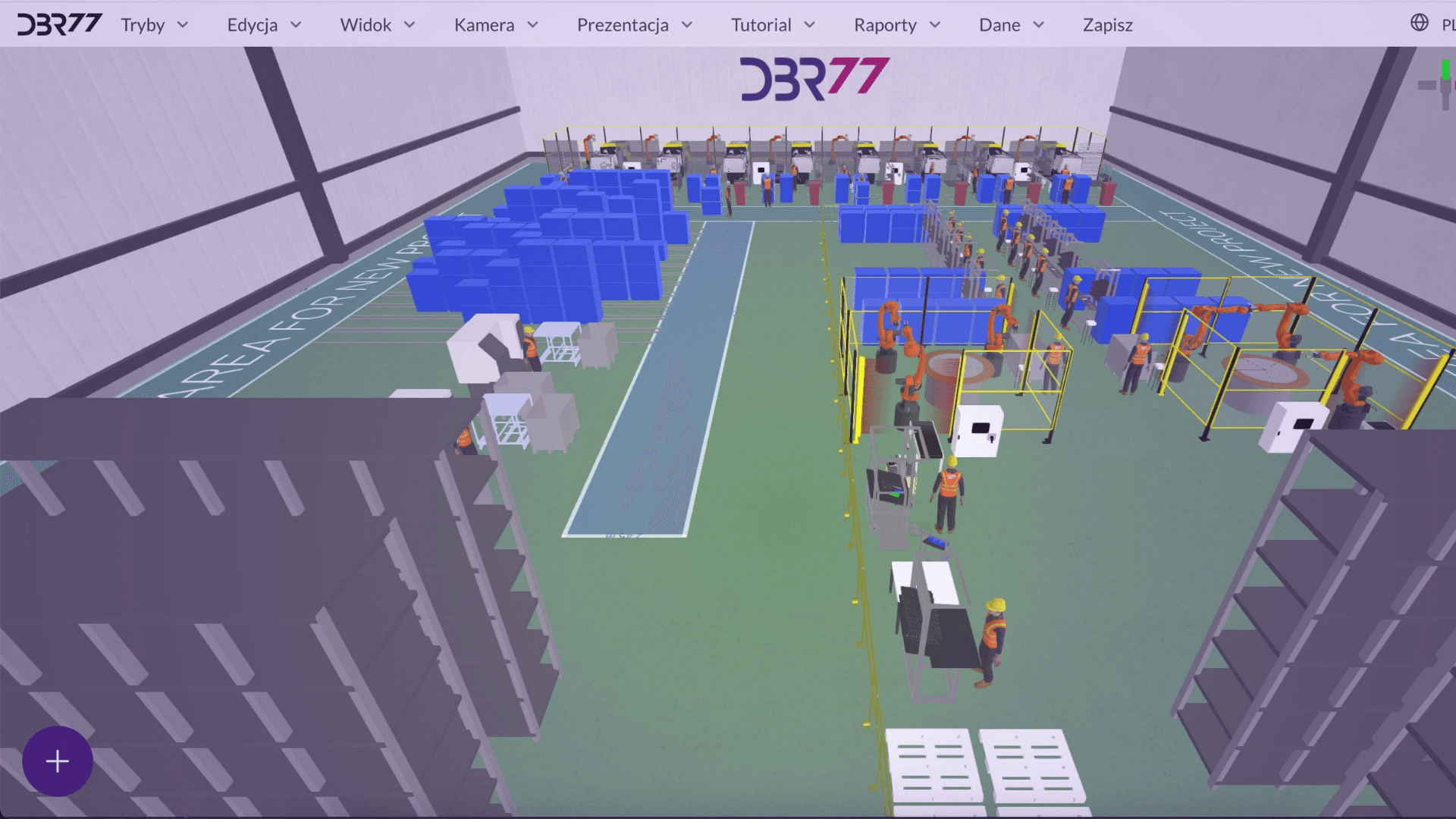
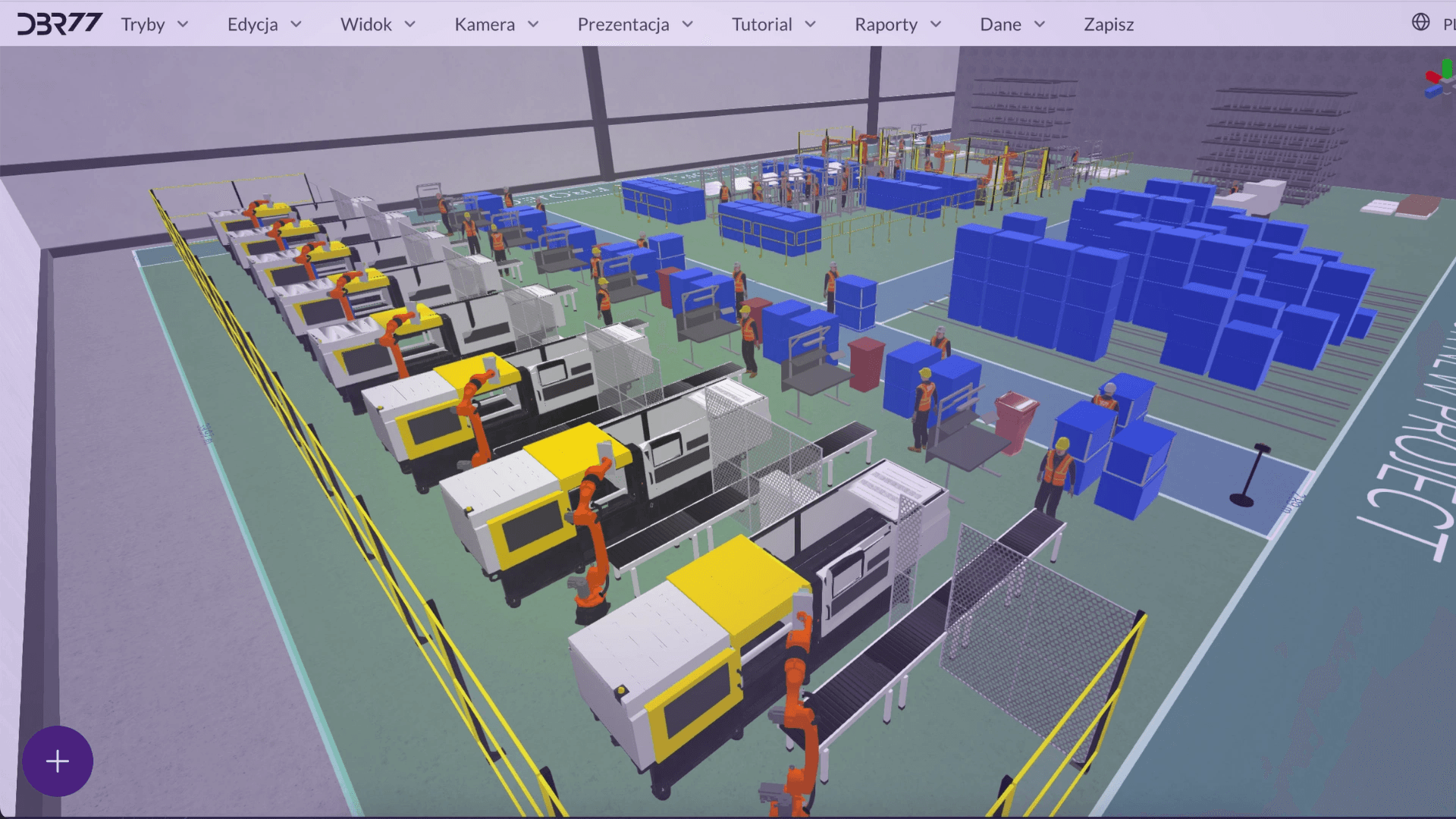
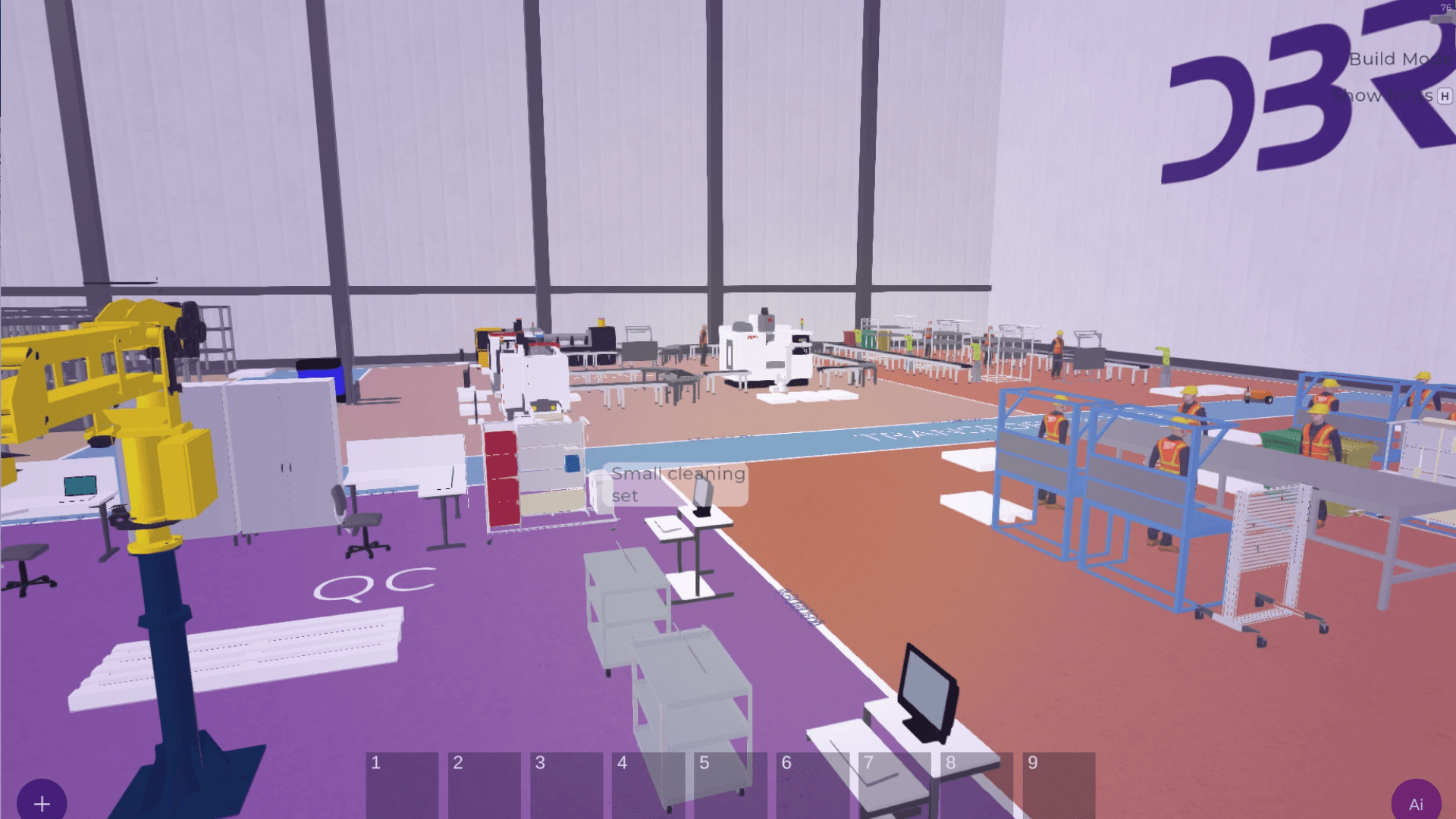
Validate space, assets, and constraints at 1:1 scale on PC, in VR, or in AR.
Stochastic simulation
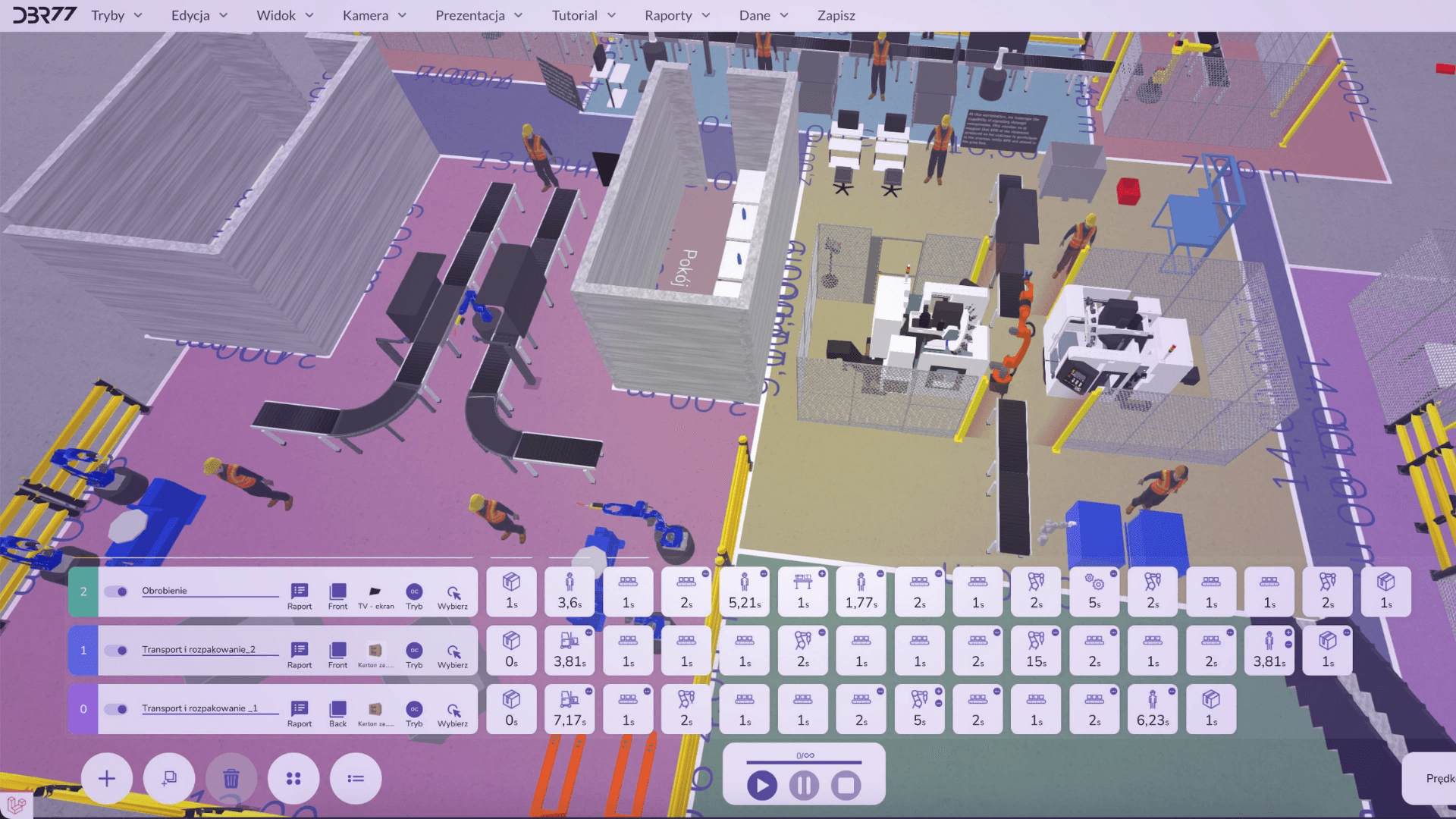
Run scenario variants that include deviations derived from historical data—not ideal assumptions.
Where it applies
Not only for manufacturing.
Wherever people and material flow through space, a Digital Twin becomes a new way to optimize decisions.
Production
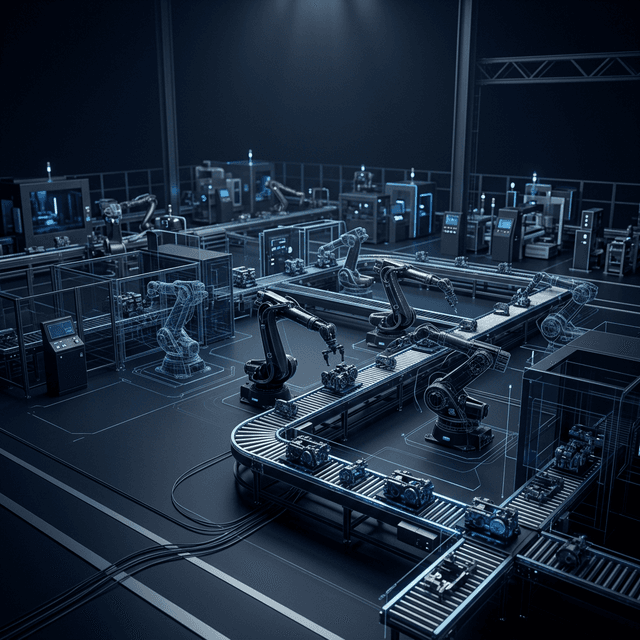
Lines, stations, people, machines, buffers, and constraints—modeled in motion.
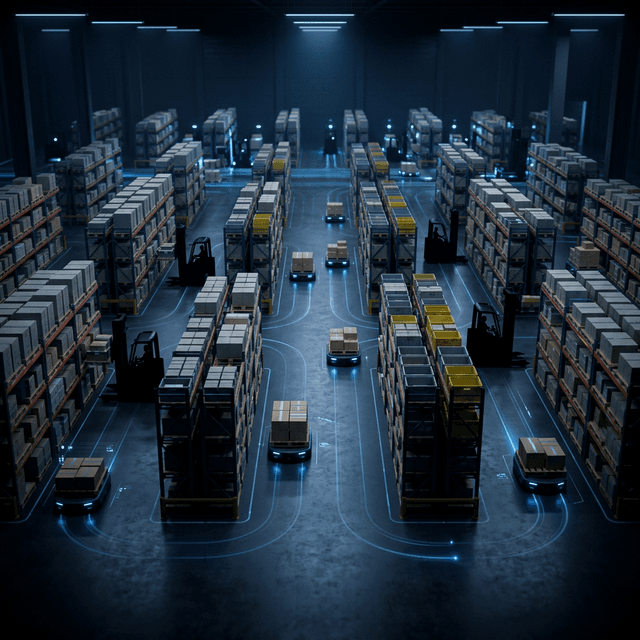
Logistics
Warehouses and intralogistics where material flow defines throughput and SLA risk.
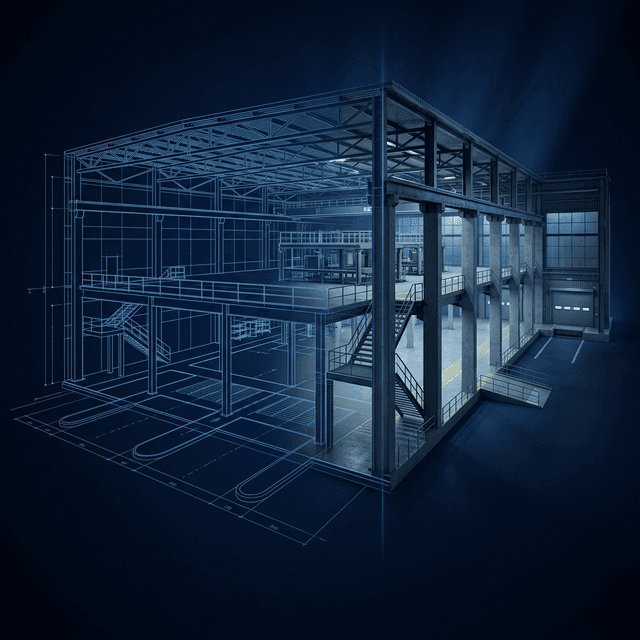
Real estate & facilities
Asset-heavy spaces where scale, access, and constraints must be validated early.
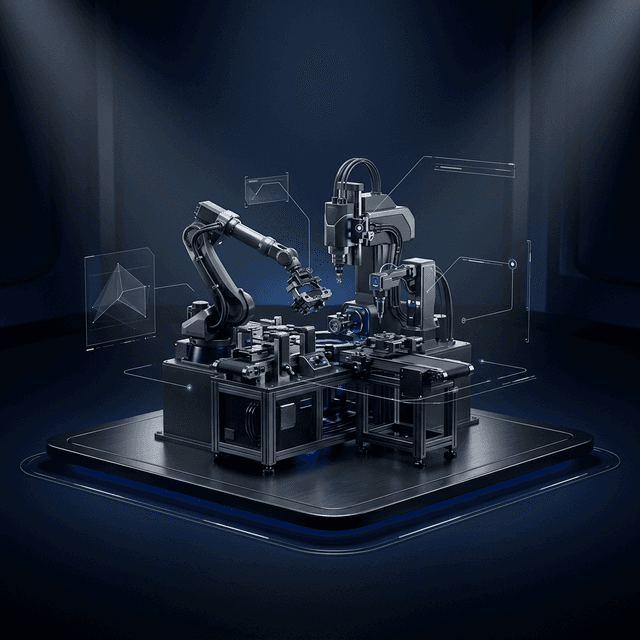
Suppliers & integrators
Presales demos and scenario validation for complex machinery and solutions.
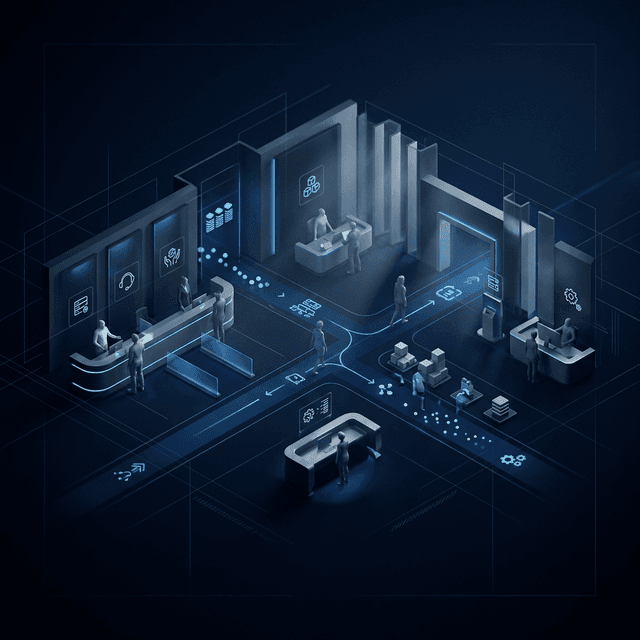
Services & operations
Any environment where people and tasks flow through space and resources are constrained.
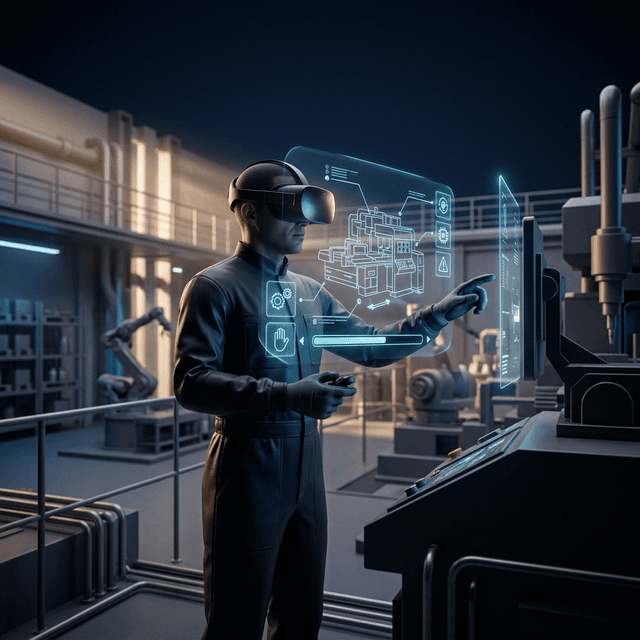
Education
Train, validate, and align teams using immersive and repeatable virtual environments.
Architecture
Plugs into what you already have.
Start delivering value in weeks, not years. No rip-and-replace. Build the model first, calibrate with history, then connect live data where it matters.
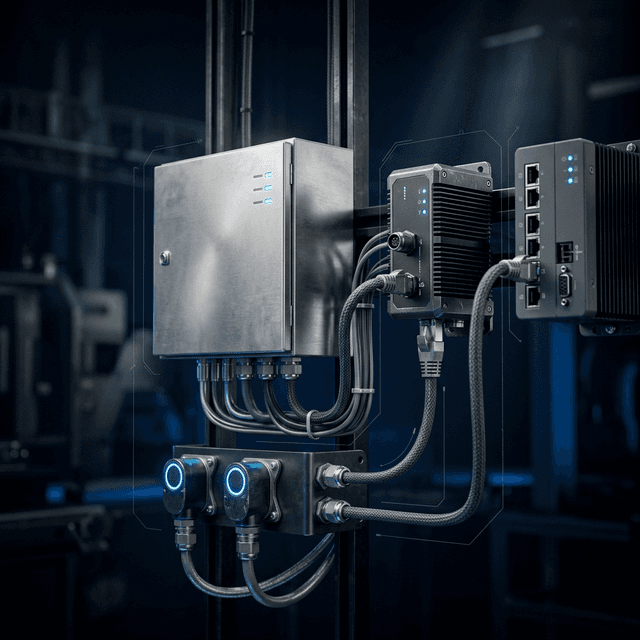
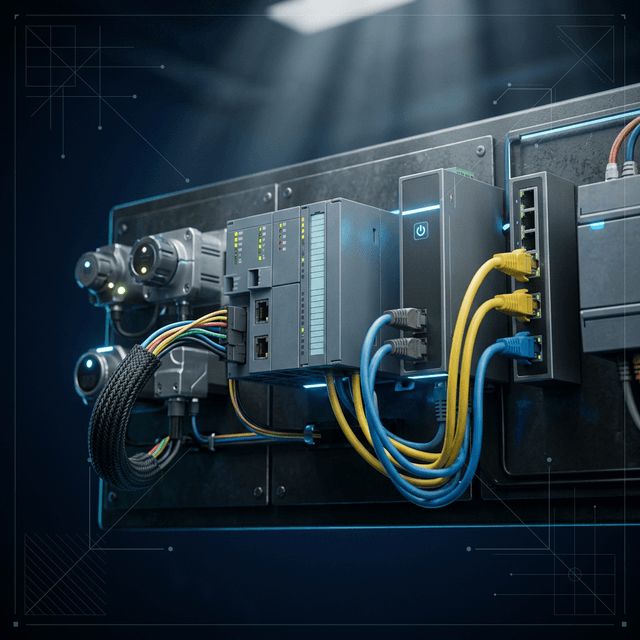
Industrial equipment
Connect directly to the machines that run your operations.
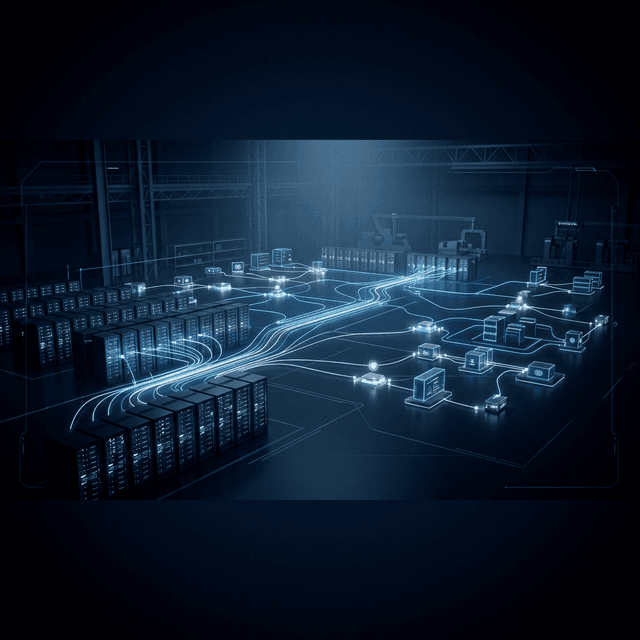
Enterprise systems
Unify shop-floor reality with your business backbone.
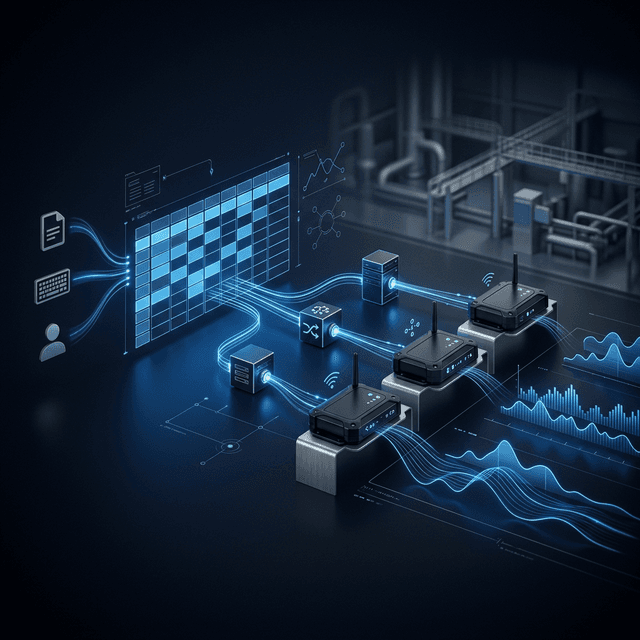
Data sources
Start manual, import historical traces, then scale to live APIs.
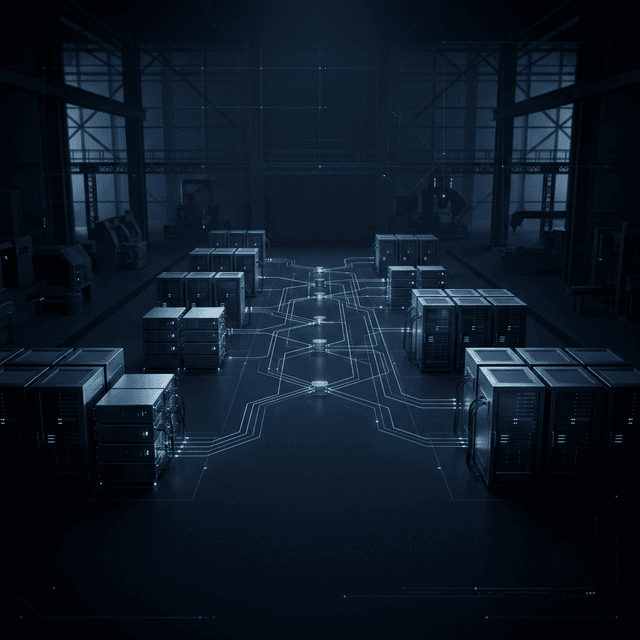
Edge-friendly
Run the right workloads close to where events happen. Scale from pilots to multi-site rollouts.
Governed decisions
The system supports recommendations and insights, while decisions remain under human approval.
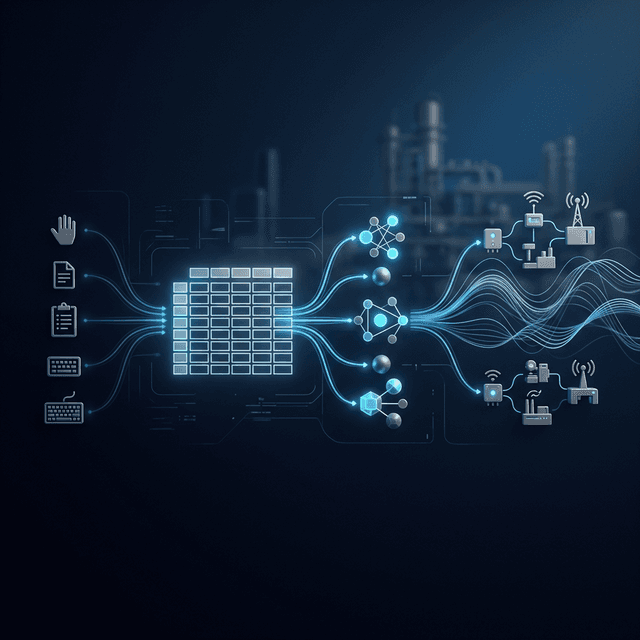
Next step
Map your current data reality and define a path from manual → historical → live.
Trust
Security is foundational, not optional.
A long-term Digital Twin becomes the system of decision-making. Security, governance, and data boundaries must be designed-in from day one.
Enterprise-grade posture
Strong defaults for identity, access, encryption, and auditability.
Data residency options
Keep data in your required region and maintain regulatory compliance.
Human approval layer
AI supports analysis; your leadership retains final accountability for decisions.
Education
Make DT stick inside the organization
Adoption is a capability. Use our materials to build fluency across teams and roles.
DBR77 Masterclass
Courses that help teams translate strategy into measurable execution.
Factory on Air
A podcast on transformation, operations, and decision engineering—ready to share internally.
Ready to see DT in action?
Build the model. Test the variants. Choose robust decisions.
Start with manual inputs, calibrate with history, then connect live data where it creates the most value.